
Best Underbody Rust Protection UK: Lanolin vs Underseal

Last Updated: November 26, 2026
Quick Summary
The best underbody rust protection in the UK depends on the area: a flexible lanolin spray that creeps into seams and displaces moisture suits chassis, seams and cavities, while brush-on bitumen underseal better resists stone chips on wheel arches and floorpans. Preparation decides whether either coating lasts.
- Lanolin sprays penetrate seams, displace moisture and stay flexible rather than cracking.
- Bitumen underseal is brushable, quick drying and self-levelling with acoustic dampening properties.
- Remove loose rust, scale, oil and grime, then treat remaining corrosion with a rust converter.
- A coating that traps moisture against steel can accelerate corrosion rather than prevent it.
- Inspect treated areas periodically and touch up where the film has worn.
Table of Contents
- What Underbody Rust Protection Actually Does
- Choosing an Underbody Rust Protection Spray for Your Vehicle
- How to Protect a Car Chassis from Rust Before Coating
- Cavity Wax for Cars: Sealing Box Sections and Hidden Voids
- Frequently Asked Questions
What Underbody Rust Protection Actually Does
Underbody rust protection is a barrier coating applied to a vehicle's underside that displaces moisture and oxygen from steel, slowing the corrosion that road salt and wet weather accelerate. Lanolin-based coatings are designed for exactly this job: keeping water off bare metal leaves the rust reaction with nothing to feed on. A coating that creeps into seams and stays flexible can do more than a hard skin that cracks. Browse the full underbody protection range to see the formats available.
Choosing an Underbody Rust Protection Spray for Your Vehicle
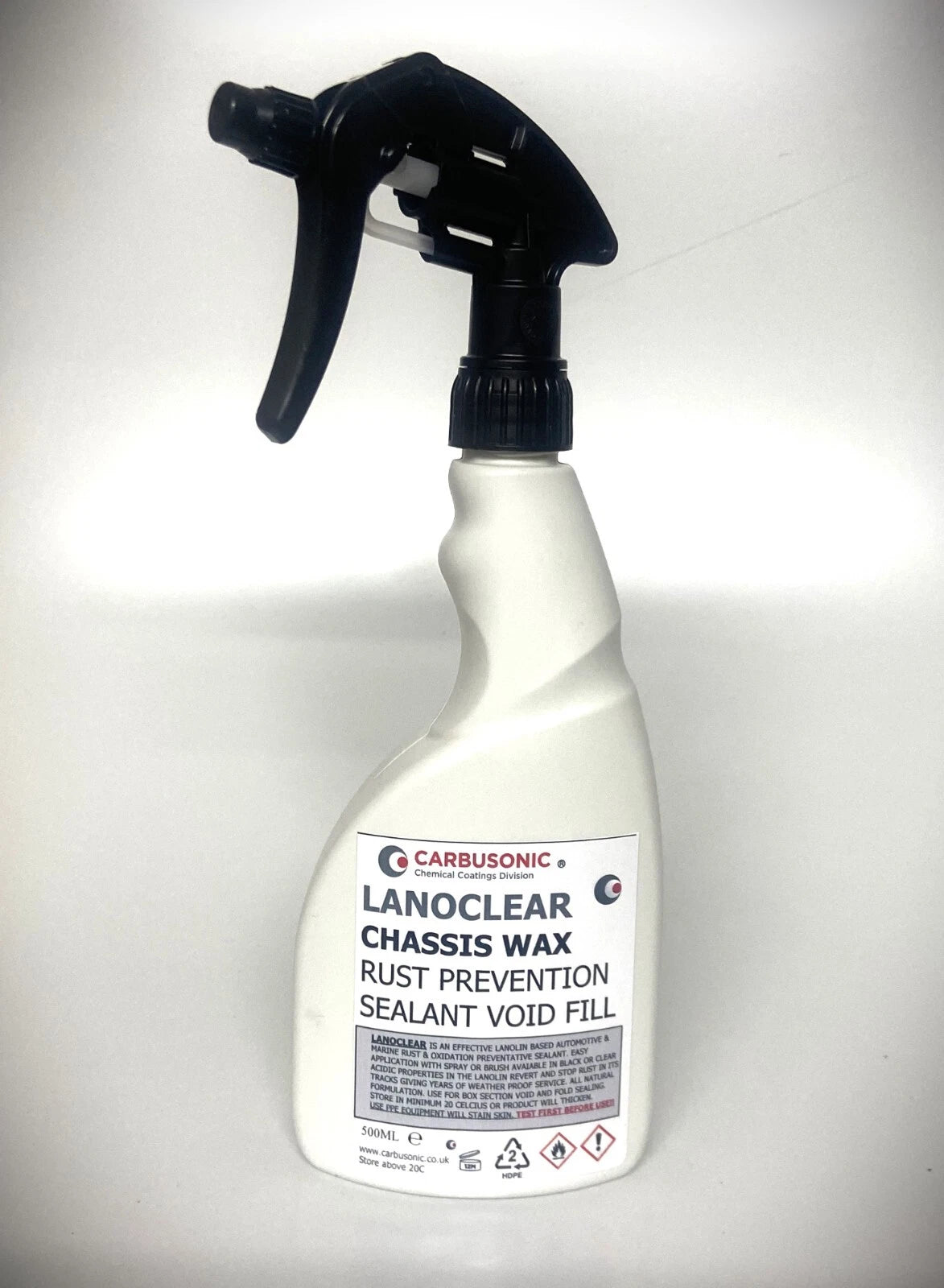
A lanolin-based spray is one option for underbody rust protection because it can penetrate seams, displace moisture and stay flexible rather than cracking. LanoClear gives a clear film, while LanoBlack lanolin spray leaves a black finish for chassis and underbody use. Our brush-on underseal is a bitumen-based product with acoustic dampening properties and is brushable, quick drying and self-levelling.
| Format | Protection mechanism | Preparation demand | Application | Durability and inspection | Best suited to |
|---|---|---|---|---|---|
| Lanolin spray (clear or black) | Creeping, moisture-displacing film that stays flexible | Moderate: degrease, remove loose rust, dry | Spray gun or aerosol; light passes; cavity wand for voids | Flexible film; inspect annually and touch up worn areas | Daily drivers, chassis, seams, cavities, inspection-friendly finishes |
| Bitumen underseal (brush-on) | Thick barrier film with stone-chip resistance and sound deadening | High: surface must be clean and sound; sits on top of metal | Brush or roller; build in coats | Hard-wearing but can crack or lift if moisture is trapped beneath; inspect for cracks | Wheel arches, floorpans, areas exposed to stone chips |
| Wax-based cavity coating | Creeping wax that clings to enclosed steel | Moderate: clean and dry the void | Sprayed into box sections and hidden voids with a wand | Creeps and clings; reapply where film has worn | Box sections, sills, hidden voids |
| Rust converter plus topcoat | Converts remaining corrosion, then seals | High: remove loose rust and scale first | Brush or spray converter, then topcoat | Depends on converter and topcoat; inspect both | Vehicles with existing surface rust after removal |
- Daily driver with light surface rust: remove loose rust, treat with a rust converter, then apply a lanolin spray or a converter-plus-topcoat system. Do not brush underseal straight over rust.
Two compatibility points are worth checking before you buy. First, some coatings can affect rubber and plastics over time, so mask or avoid flexible components and check the product label and safety data sheet for material compatibility. Second, a coating that traps moisture against steel can accelerate corrosion rather than prevent it, which is why preparation and dry conditions matter as much as the product itself. Browse the full underbody protection range to see the formats available.
How to Protect a Car Chassis from Rust Before Coating
Preparation decides whether a coating lasts. Remove loose rust, scale, oil and grime first, then treat any remaining corrosion with a rust converter before you apply protection. Coating over loose rust can trap moisture underneath, so the film may lift. Work in dry conditions and let the surface dry fully before coating.
Preparation quality-control checklist
- Cleanliness: the surface should be free of oil, grease, wax and road film. Degrease before mechanical work, not after.
- Rust removal: loose rust and scale should be gone. Remaining sound corrosion can be treated with a converter, but flaking rust must be removed first.
- Dryness: the surface should be fully dry before coating. Trapped moisture under a film is a common cause of early failure.
- Coverage: check seams, box sections, chassis rails, floorpans and the areas behind arch liners. Missed areas are where corrosion restarts.
- Overspray: mask brake components, suspension bushes, flexible hoses and anything the label says to avoid. Check material compatibility on the safety data sheet before spraying near rubber or plastics.
- Curing: allow the film to cure as the label states before exposing it to road spray or washing.
Signs a coating is failing
- Peeling or flaking: usually preparation-related, often from coating over loose rust or a contaminated surface.
- Soft or tacky film: may indicate incomplete curing, trapped solvent or moisture underneath.
- Rust bleeding through: the coating is not sealing the steel, or corrosion was active when it was applied.
- Holding moisture: a film that stays wet or traps water against the metal can accelerate corrosion rather than prevent it.
- Worn or thin areas: common on high-exposure panels and around arch edges; touch up before corrosion starts.
Safety and disposal
Work in a well-ventilated area, wear gloves and eye protection, and follow the product label and safety data sheet for personal protective equipment and disposal. Do not mix chemicals unless the manufacturer's instructions say to. Keep coatings away from ignition sources where the label requires it, and dispose of rags and containers as the label directs.
Inspect treated areas periodically and touch up where the film has worn.
Cavity Wax for Cars: Sealing Box Sections and Hidden Voids
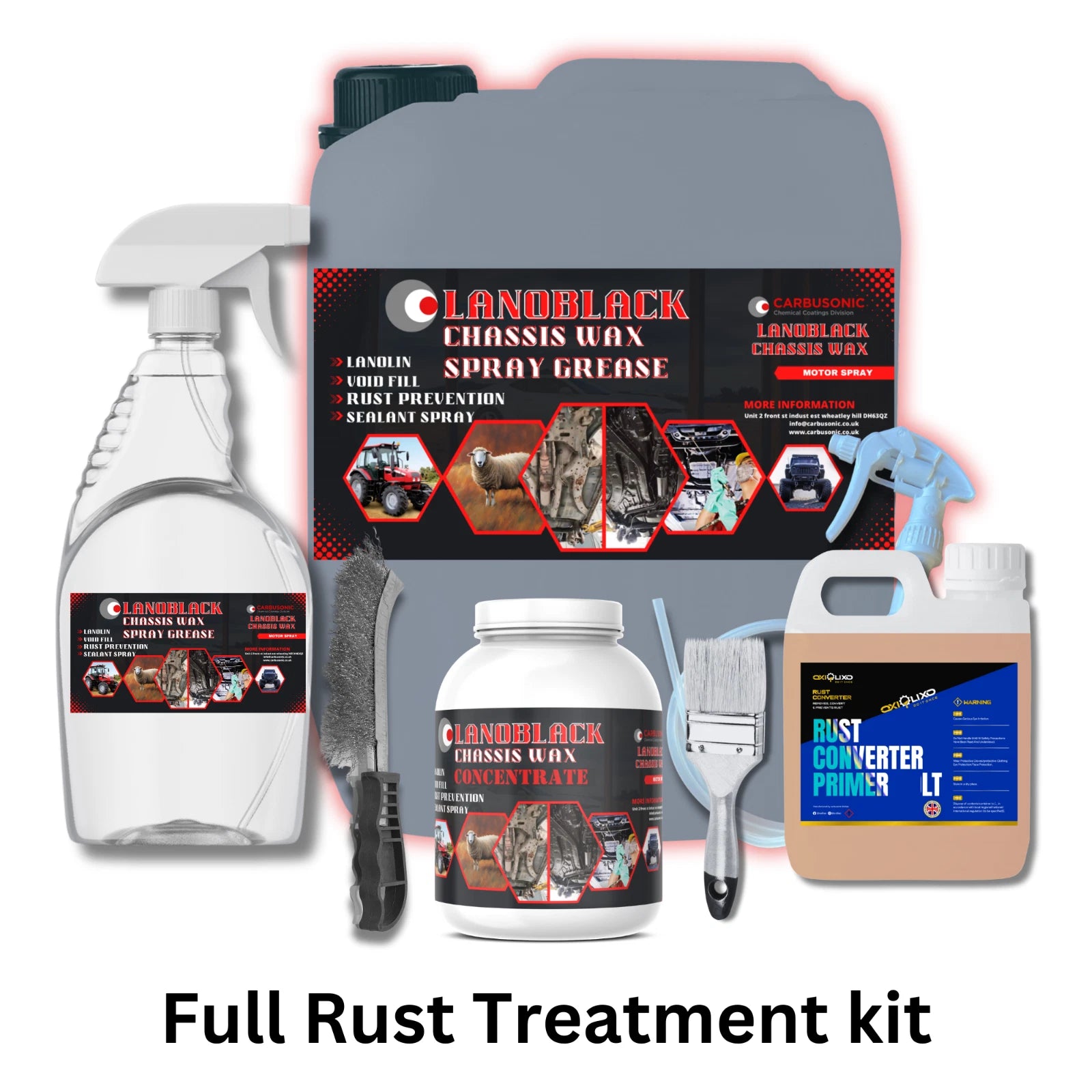
Cavity wax for cars is a creeping coating sprayed into box sections and hidden voids where a brush cannot reach. These enclosed areas trap moisture and rust from the inside out, so they need a product thin enough to flow and cling. Our full chassis wax kit combines rust converter primer, grease and spray heads for chassis protection.
Frequently Asked Questions
Is lanolin-based underbody protection better than traditional underseal?
They do different jobs. Lanolin coatings such as LanoClear and LanoBlack are lanolin-based rust protection; LanoClear gives a clear finish and LanoBlack a black finish for underbody protection. Many owners use both: a lanolin treatment for penetration and a durable underseal where abrasion is heaviest. Always check compatibility and follow the product label before layering coatings.
Should rust be removed before applying underbody rust protection?
Loose rust, scale, oil and dirt must come off first, because a coating cannot bond to flaking metal. On light surface rust you can convert the remaining corrosion with a rust converter primer, then seal it with a lanolin coating once the primer has cured. Heavy, structural corrosion needs cutting out and welding before any protection goes on.
How often should underbody rust protection be checked or reapplied?
Inspect treated areas at least once a year, ideally before winter and again after the salt season. Look for thin patches, areas washed clean by pressure washing, and any new surface rust at seams and mounting points. High-exposure zones such as wheel arches and the rear chassis often need a top-up sooner than the rest.


