
How to Apply Lanolin Rust Protection to Your Car

Last Updated: 21 November 2026
Quick Summary
Lanolin rust protection for cars works by applying a thin, even coat of refined wool grease to a clean, dry underbody so it bonds to metal and creeps into seams. Prepare the surface, mask brake discs and hot exhaust parts, then treat cavities with a creeping wax and recheck annually.
- Scrape or wire-brush away loose rust and mud, then wash and dry the underbody fully before coating.
- Mask off brake discs and hot exhaust parts, and apply thin coats along chassis rails, floor pans, sills and wheel arches.
- Inject cavity wax through existing access holes for box sections, door bottoms, sills and chassis legs.
- Plan an annual inspection and top up high-wear areas such as wheel arches and sill leading edges.
- Use the clear grade on structural sections so metal stays visible for MOT inspection.
Table of Contents
- Why Lanolin Rust Protection Works on Car Underbodies
- How to Apply Lanolin Underbody Coating Safely
- Car Cavity Wax Treatment and Hard-to-Reach Areas
- Lanolin vs Traditional Wax and Underseal: How They Compare
- How Long Does Lanolin Underbody Protection Last?
- Preparing a Vehicle Before Rustproofing
- Applying Lanolin Protection to Classic and Modern Vehicles
- Safety and Environmental Precautions
- Assessing and Treating Existing Rust
- Frequently Asked Questions
Why Lanolin Rust Protection Works on Car Underbodies
Lanolin rust protection for cars uses refined wool grease to form a moisture-displacing barrier film over metal. At Carbusonic, we have formulated lanolin-based coatings for close to twenty years. Lanolin is a natural wool grease that bonds to metal and creeps into seams. LanoClear dries to a transparent, self-healing film that keeps metal visible for inspection.
Driver and Vehicle Standards Agency MOT inspection manual sets out how corrosion is assessed on the test.
How to Apply Lanolin Underbody Coating Safely
Applying lanolin underbody coating safely means preparing the surface, protecting yourself and working in a ventilated space with the vehicle properly supported. Scrape or wire-brush away loose rust and mud, wash and dry fully, mask off brake discs and hot exhaust parts, then apply a thin, even coat along chassis rails, floor pans, sills and wheel arches.
Our lanolin underbody car wax is the clear, self-healing grade we formulate for chassis and floor-pan work, and the ready-to-spray underbody rustproofing kit includes a sprayer.
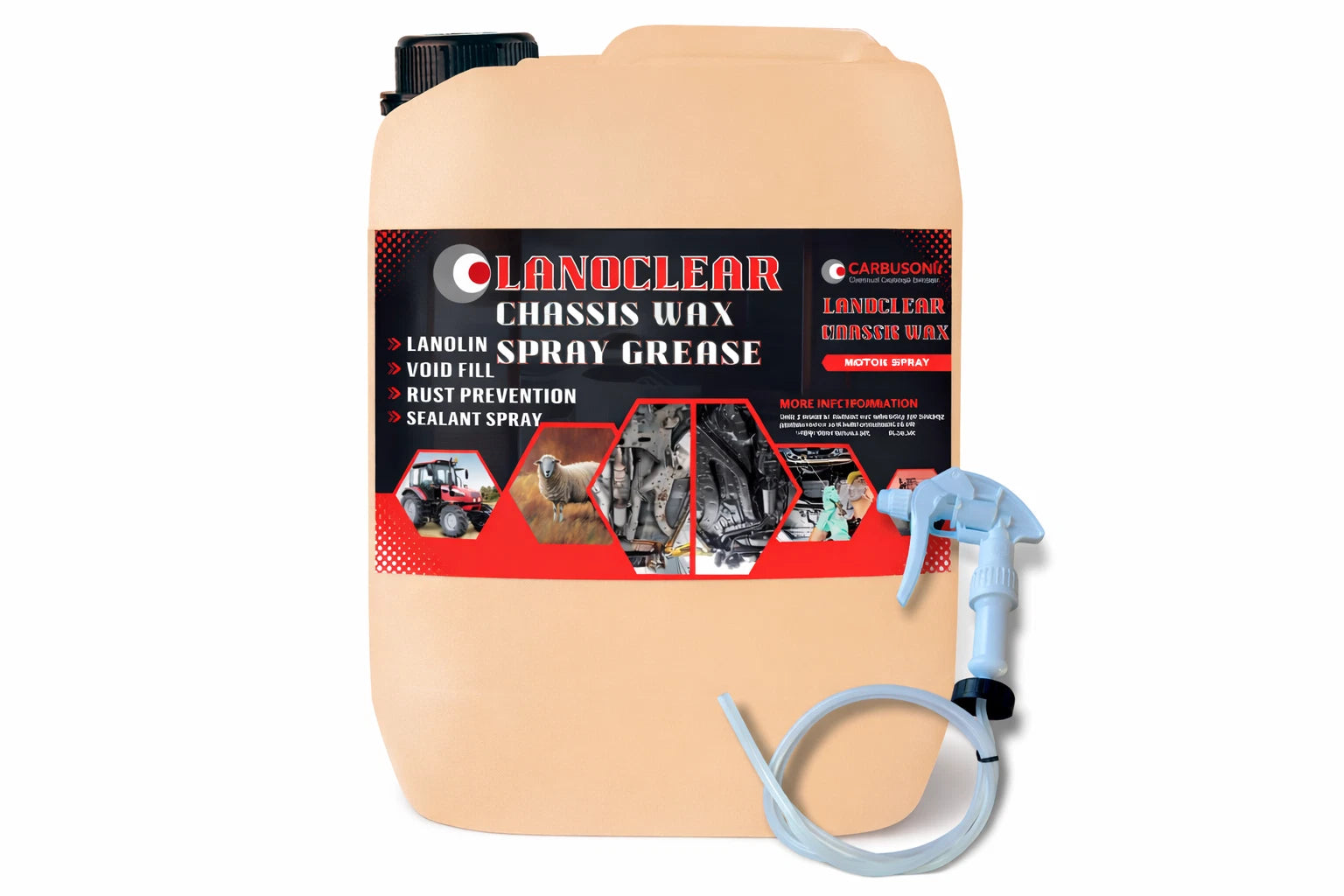
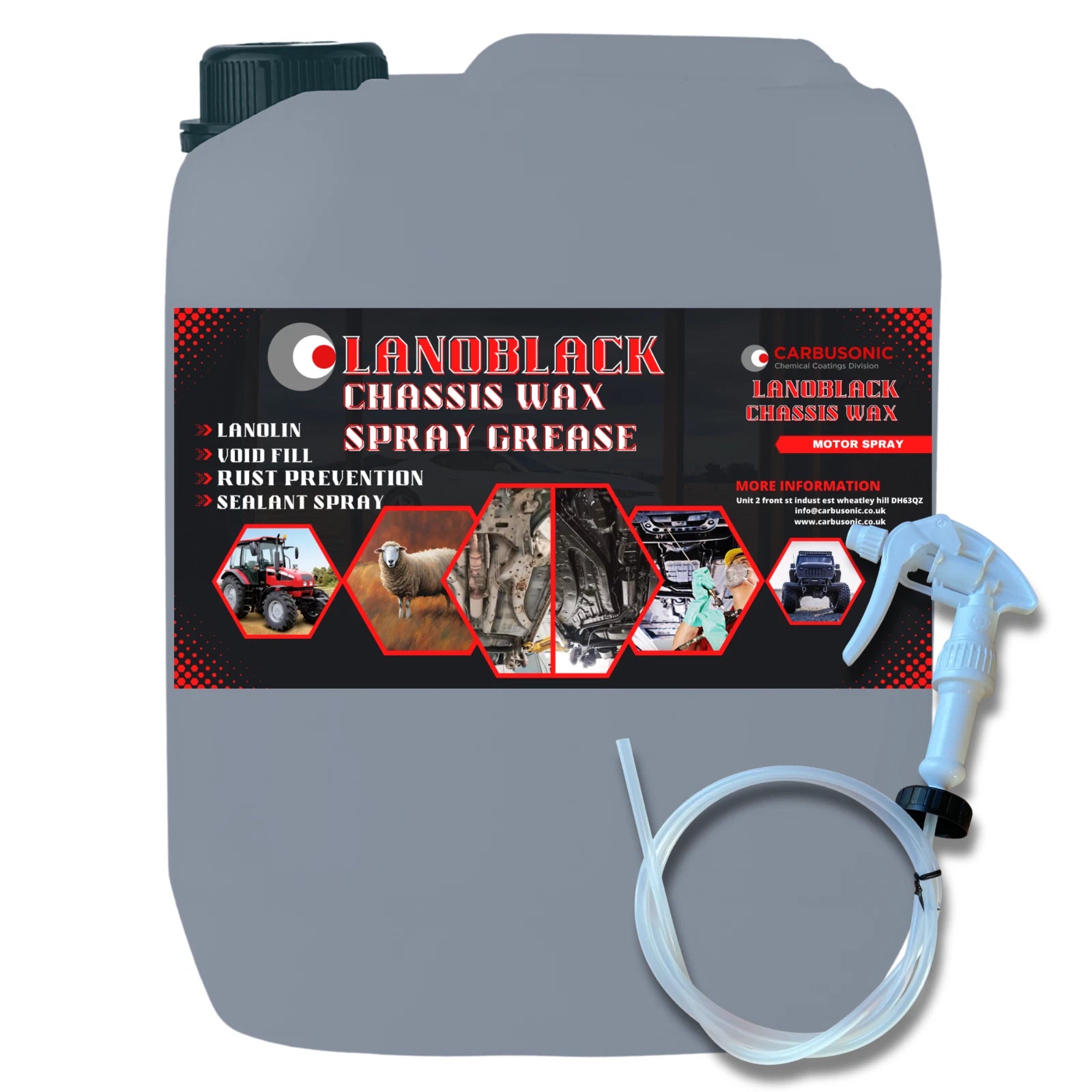
Car Cavity Wax Treatment and Hard-to-Reach Areas
Car cavity wax treatment injects a creeping protective coating into enclosed sections such as box sections, door bottoms, sills and chassis legs, which rot from the inside out. Insert the probe through existing access holes and keep moving so the coating covers the full cavity rather than pooling. We supply Lanowand spray attachements for box section and void internal coating.
Our lanolin rust inhibitor spray is in the trigger spray format we make for cavities, while the LanoBlack chassis wax with thinner suits larger enclosed sections.
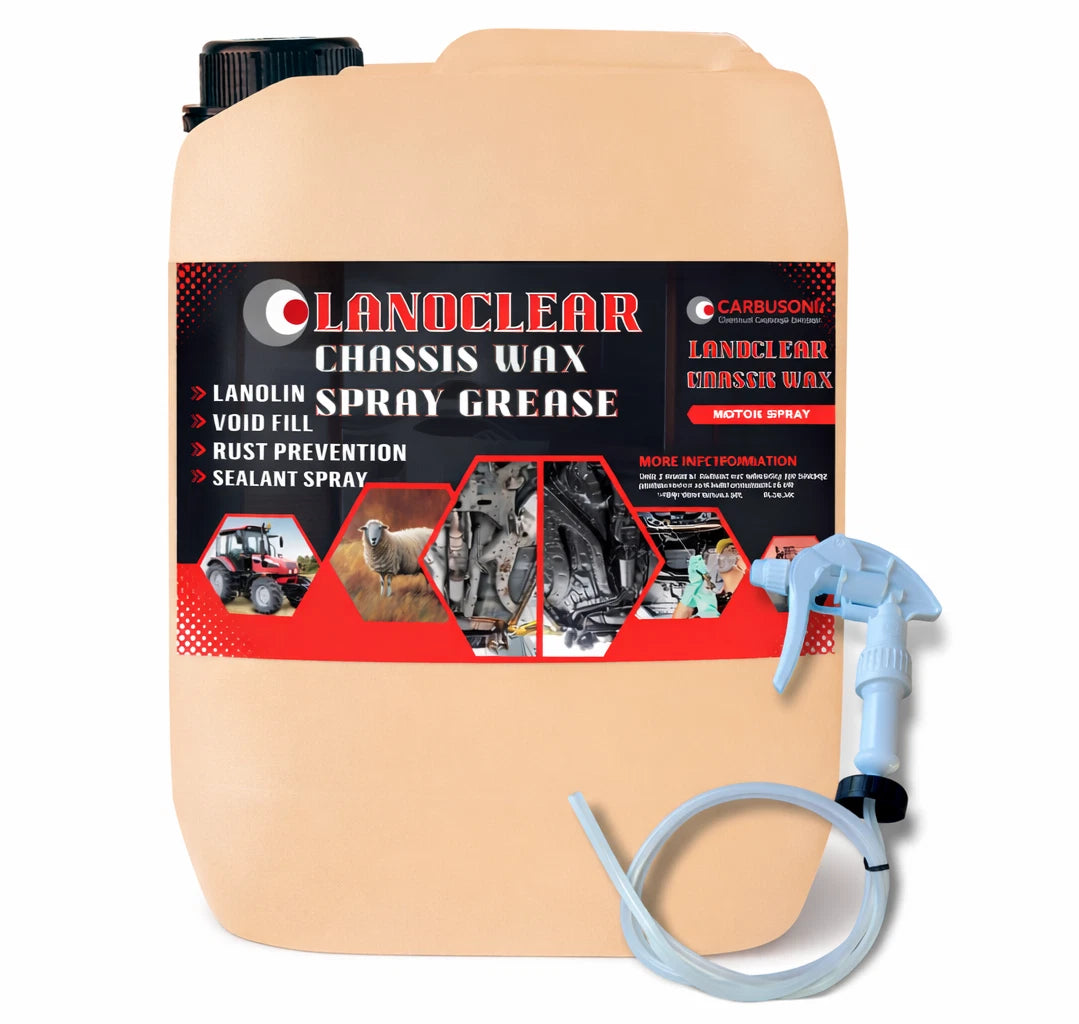
LanoClear Lanolin Rust Inhibitor Anti Corrosion Spray for Car 4x4 Marine Boats
Health and Safety Executive guidance on safe use of chemicals at work is worth reading before any aerosol application in an enclosed space.
Lanolin vs Traditional Wax and Underseal: How They Compare
Method |
Penetration into seams |
Self-healing |
Inspection-friendly |
|---|---|---|---|
Lanolin clear coating |
High, creeps into gaps |
Yes, film reseals |
Yes, transparent |
Traditional hard wax |
Moderate |
Limited |
Partly |
Rubberised underseal |
Low, sits on top |
No, cracks |
No |
Lanolin needs rechecking each year and can feel soft, whereas hard underseal looks tougher but hides corrosion and can trap moisture once it cracks.
How Long Does Lanolin Underbody Protection Last?
Plan an annual inspection and a top-up in high-wear areas such as wheel arches and sill leading edges.
Preparing a Vehicle Before Rustproofing
Preparation decides whether any rustproofing lasts. Surface rust can be treated and coated over, but deep, flaking or perforating corrosion needs cutting out and welding first. Our full lanolin protection range shows the grades we manufacture, and where components are removed for proper cleaning, our Professional Ultrasonic Cleaning Solutions give a thorough way to strip years of grime and surface corrosion from brackets, fixings and smaller parts before they are coated and refitted.
Applying Lanolin Protection to Classic and Modern Vehicles
On a classic, a clear lanolin film that lets metal be seen is often preferred; on a modern vehicle, the priorities are cavity protection behind plastic liners and coverage of the rear subframe and suspension mounts. Thin coats applied methodically beat heavy coats applied quickly.
Safety and Environmental Precautions
Lanolin-based products are still chemicals. Work in a well-ventilated area, wear eye protection and gloves, avoid breathing aerosols, keep spray away from hot exhaust parts, and follow the product label and safety data sheet. We do not describe any coating as completely safe or non-toxic.
Assessing and Treating Existing Rust
Treat existing rust before you coat. Wire-brush surface rust back to sound metal, treat remaining corrosion with a suitable converter if the label allows, then apply the lanolin film; coating over loose rust simply seals in the problem.
Frequently Asked Questions
Does lanolin stop rust on cars?
Lanolin is formulated to displace moisture from the metal surface and form a barrier against corrosion. It penetrates porous rust and forms a water-repellent barrier film, so surface rust stops spreading. It does not reverse metal loss, so loose rust should be wire-brushed back before treatment. LanoClear is formulated to bond over existing rust and keep working as a self-healing coating.
Can lanolin rust protection be applied over existing rust?
Yes. LanoClear is designed to penetrate and bond over existing surface rust, displacing moisture as it creeps into seams and box sections. Scrape or wire-brush away loose, flaking rust and debris first so the coating reaches sound metal. Heavy scale should be assessed before treatment, and badly perforated sections may need welding rather than coating.
Can lanolin underbody protection be washed off?
LanoClear is described as resistant to road spray, rain and pressure washing. Avoid directing a high-pressure jet straight at the coating at close range, as this can disturb a fresh film. Reapply in high-exposure areas as required.


