
How Do You Remove Carbon From Engine Parts Safely?

Last Updated: 20 November 2026
Quick Summary
To remove carbon from engine parts safely, choose between dissolving deposits with a chemical solvent or scraping them off mechanically. Chemical cleaning lifts soot and carbon from internal cavities a brush cannot reach, while mechanical methods such as wire brushing or media blasting suit heavy crust and large flat surfaces. Soak first, scrape second and rinse last.
- Carbon deposits are baked-on combustion residue that build up on piston crowns, cylinder heads, intake valves and exhaust manifolds.
- Hard scraping on aluminium can gouge the surface and create high spots that collect carbon faster next time.
- Soak the cylinder head in an ultrasonic tank, then rinse with clean water and dry straight away.
- Choose a concentrate with an inbuilt corrosion inhibitor for aluminium when selecting a carbon remover.
- Our 25-litre engine parts formula covers bulk use for larger jobs.
Table of Contents
- How to Remove Carbon From Engine Parts: Chemical vs Mechanical Methods
- How to Clean Carbon Off Pistons and Remove Carbon From Cylinder Heads
- The Best Carbon Remover for Engine Parts and How to Clean an Exhaust Manifold
- Frequently Asked Questions
How to Remove Carbon From Engine Parts: Chemical vs Mechanical Methods
How you remove carbon from engine parts safely comes down to one choice: dissolve it or scrape it off. At Carbusonic, we make and supply the chemical side of that choice.
Carbon deposits are baked-on combustion residue that build up on piston crowns, cylinder heads, intake valves and exhaust manifolds, hurting performance and fuel efficiency. Chemical cleaning uses a solvent to soften deposits; mechanical cleaning uses a wire brush, scraper or media blasting.
Chemical Cleaning: What It Does Well
Chemical cleaning uses a solvent to lift soot and carbon from internal cavities that a brush cannot reach. Our carburettor engine parts range covers the concentrates used for this work.
Mechanical Cleaning: Where It Fits
Watch out: hard scraping on aluminium can gouge the surface and create high spots that collect carbon faster next time.
Method |
Best For |
Risk |
|---|---|---|
Chemical soak |
Internal cavities, alloy parts |
Wrong mix can dull aluminium |
Wire brush |
Heavy crust on steel |
Scoring soft metal |
Media blasting |
Large flat surfaces |
Media trapped in passages |
How to Clean Carbon Off Pistons and Remove Carbon From Cylinder Heads
Knowing how to clean carbon off pistons starts with the right order: soak first, scrape second, rinse last.
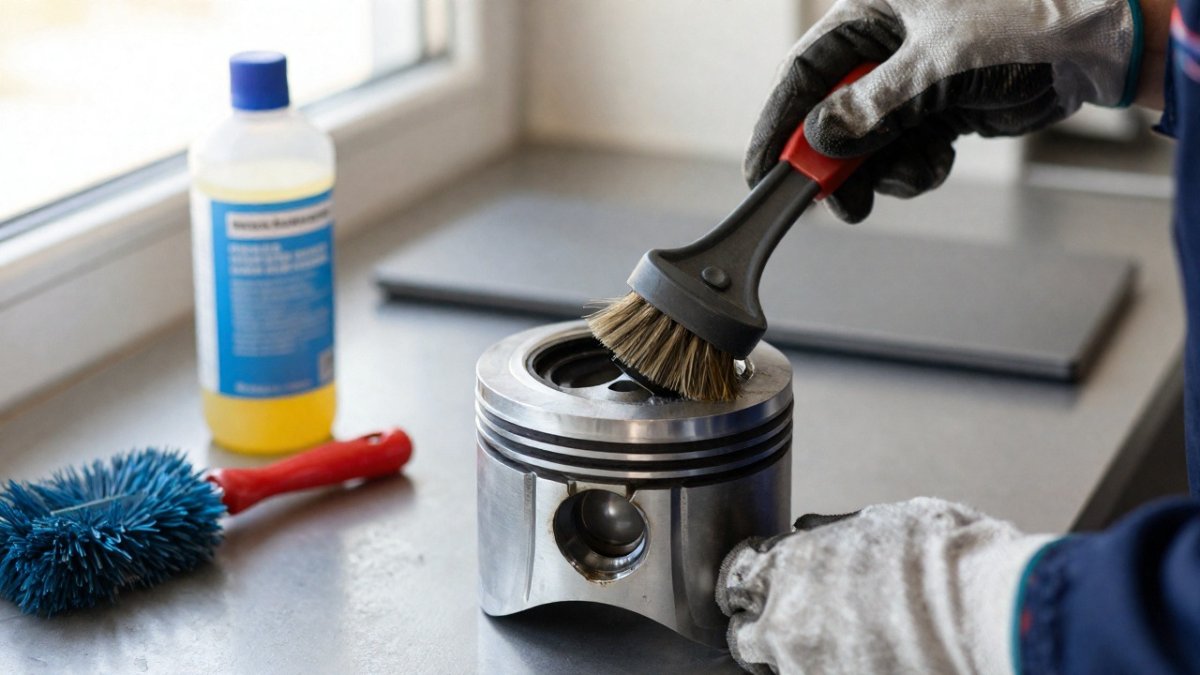
Mechanic in gloves using a wire brush to remove carbon deposits from an aluminium piston on a workshop bench
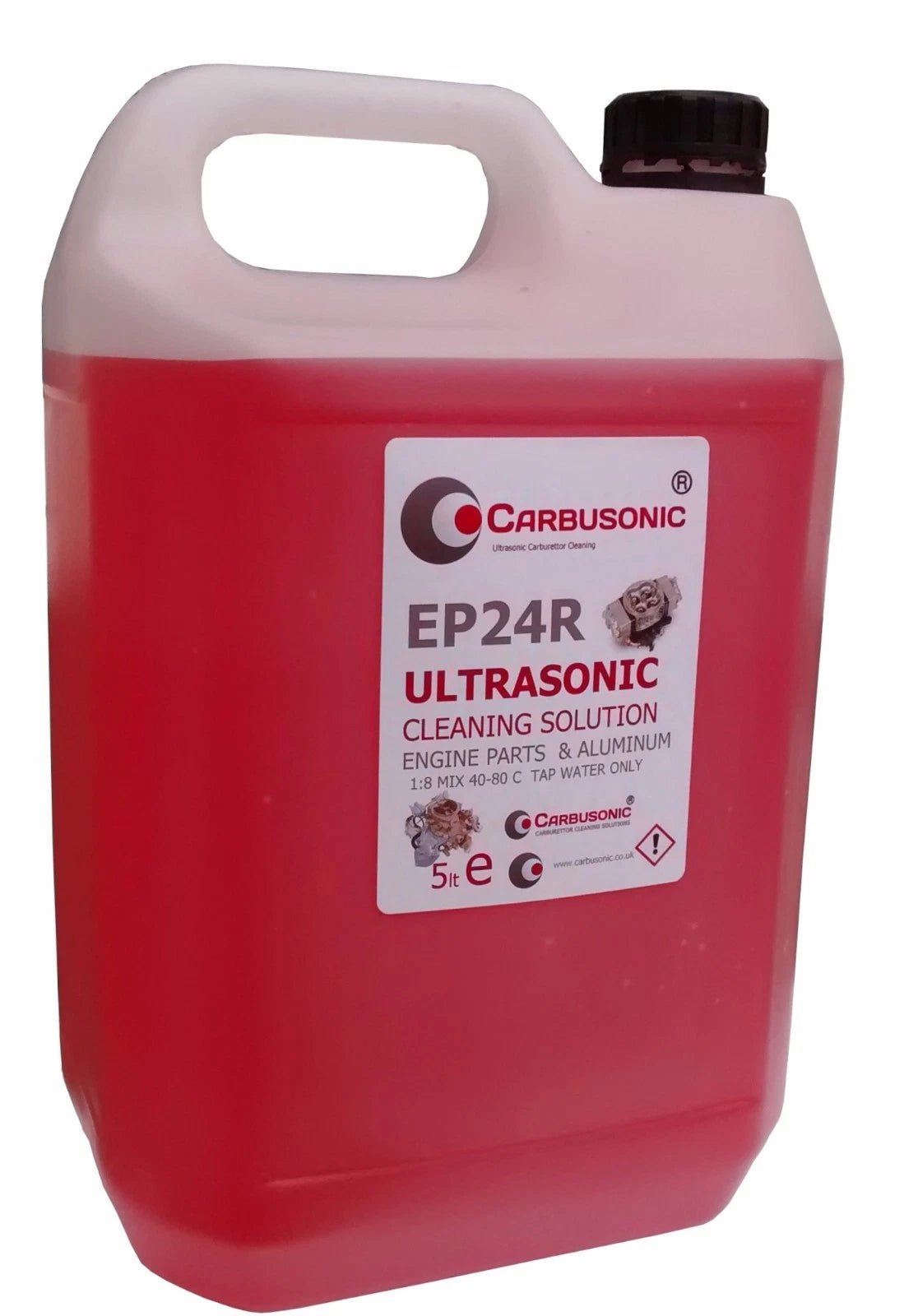
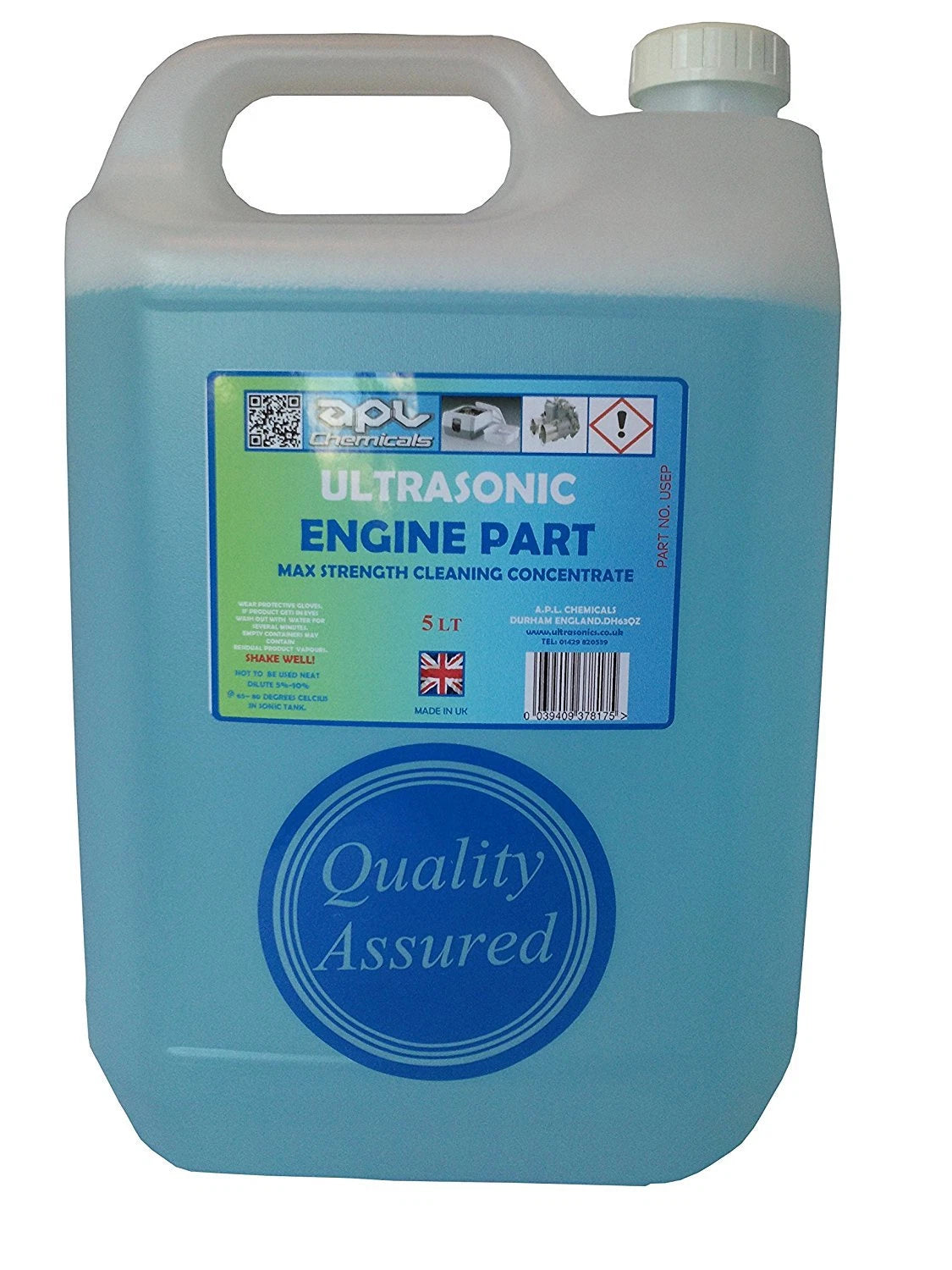
Removing carbon from a cylinder head follows the same logic: soak the head in an ultrasonic tank so the fluid reaches the combustion chamber and intake valves, then rinse with clean water and dry straight away. For this job, our engine parts ultrasonic cleaning fluid and ultrasonic carburettor cleaning solution are suitable for use on engine components.
The Best Carbon Remover for Engine Parts and How to Clean an Exhaust Manifold
When choosing a carbon remover for engine parts, look for a concentrate that lifts carbon and soot and includes an inbuilt corrosion inhibitor for aluminium. Removing carbon from an exhaust manifold can be harder because soot and baked deposits sit in a hot, awkward shape. For larger jobs, our 25-litre engine parts formula covers bulk use, and our DPF cleaner flushes diesel particulate deposits.
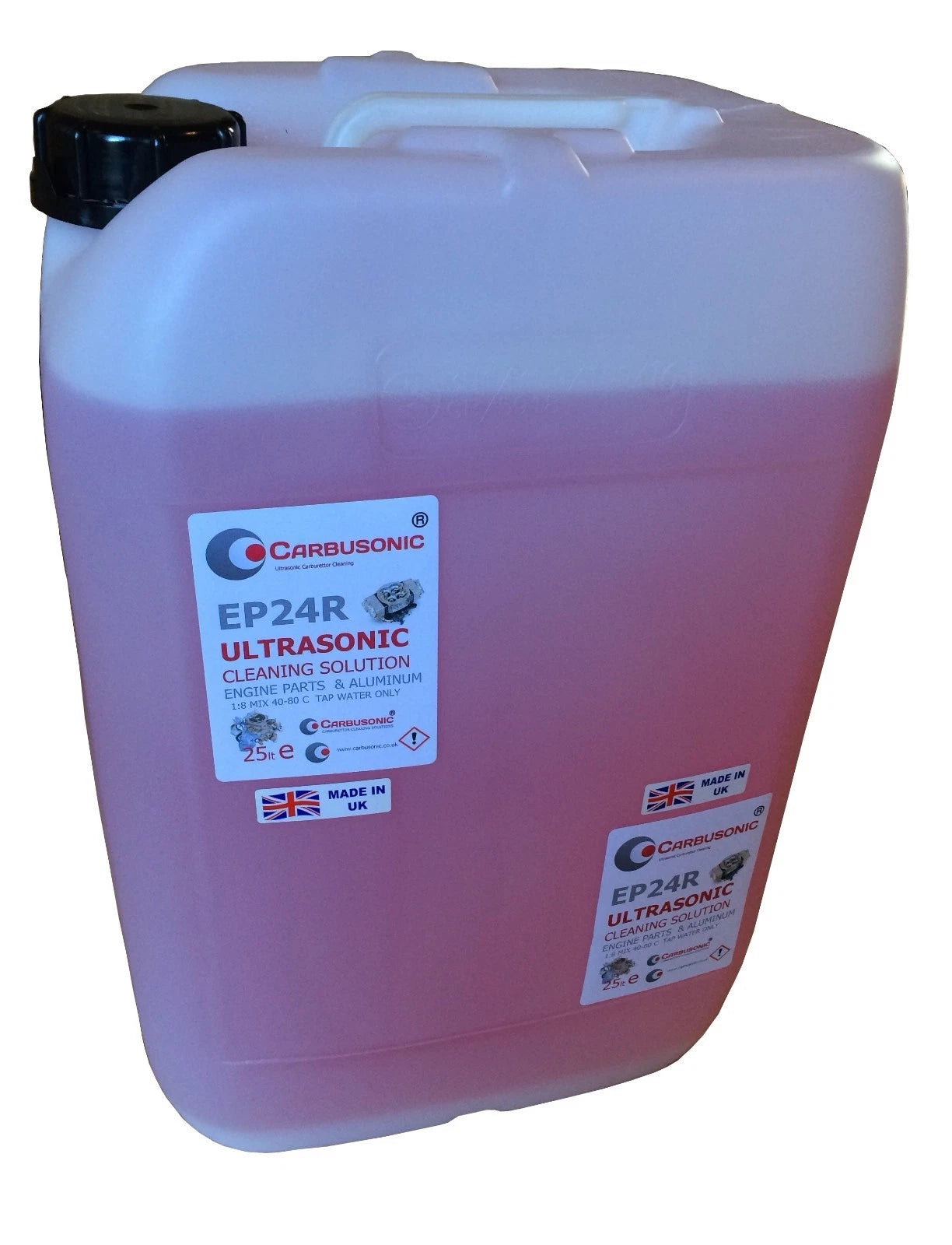
Carburetor Machine Parts Ultrasonic Cleaning Fluid Engine Parts Formula 25 LT.
Carbon will always come back. The question is whether your cleaning method protects the metal or quietly damages it. Carbusonic manufactures professional-grade ultrasonic cleaning fluids in the UK, with aluminium-safe formulas, clear mix guidance and next-day despatch. Get started with Carbusonic and clean engine parts the safe way.
Frequently Asked Questions
What is the best way to remove carbon from engine parts?
The best method depends on the part and the level of build-up. For carburettors, cylinder heads, valves and rockers, an ultrasonic cleaning solution such as Carbusonic's EP24R concentrate removes carbon, soot and grease while its built-in corrosion inhibitor protects aluminium. For heavy baked-on deposits on pistons or exhaust manifolds, combine solvent soaking with careful mechanical scraping. Always match the method to the metal: abrasive blasting suits cast iron but can damage softer aluminium surfaces.
Can you use a chemical cleaner to remove carbon from engine parts?
Yes. Solvent-based degreasers and dedicated ultrasonic concentrates break down carbon and soot without the labour of scraping every surface. Carbusonic's ultrasonic fluids are formulated for heads, valves, seats, rockers and carburettors, mixing at roughly 8 to 10 per cent by volume in water at 60 to 70°C. Check the product is aluminium-safe before soaking alloy components, and always rinse with clean water afterwards to remove residue.
How do you prevent carbon build-up after cleaning engine parts?
Preventative maintenance keeps deposits from returning quickly. Use quality fuel, add a fuel system cleaner at service intervals, and address misfires or rich running before they cause soot to accumulate. On direct injection engines, intake valve deposits are a known issue because fuel no longer washes the valves, so periodic inspection matters. Keeping the PCV system and EGR passages clear also reduces the oil vapour and soot that form carbon in the first place.


